
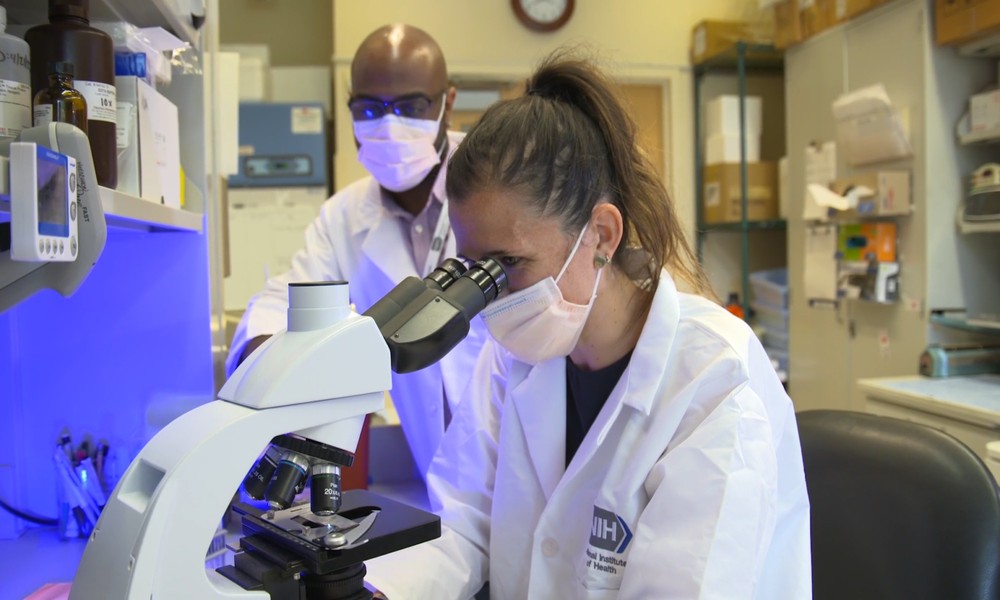
The National Institutes of Health in Bethesda and the Food and Drug Administration’s main campus in Silver Spring together employ one of the largest concentrations of credentialed scientists in federal service anywhere in the country. Bench researchers, principal investigators, medical officers, pharmacologists, epidemiologists, biostatisticians – these are professionals whose careers are built on the integrity of their scientific work and whose value to their agencies depends on their ability to reach independent, defensible conclusions. When those conclusions create friction with agency leadership, with regulatory decisions under political pressure, or with institutional positions that have already been publicly committed, the professional consequences for the scientist who speaks up can be severe. If you work at NIH or FDA and have faced or are facing adverse treatment because of a scientific position you’ve taken or a disclosure you’ve made, a Maryland federal employee attorney who understands how whistleblower protections operate in a research environment is the starting point.
The applicable legal framework is not widely understood, and the gap between what scientists believe they are protected for and what the law actually covers is where the most consequential mistakes happen.
The WPA in a Scientific Context: What Constitutes a Protected Disclosure
The Whistleblower Protection Act protects federal employees who disclose information they reasonably believe evidences a violation of law, rule, or regulation; gross mismanagement; a gross waste of funds; an abuse of authority; or a substantial and specific danger to public health or safety.
For NIH and FDA scientists, the most relevant categories in practice are violations of law or regulation and substantial dangers to public health or safety. A researcher who identifies that a clinical trial is not being conducted in accordance with its approved protocol, that data is being manipulated in violation of research integrity standards, or that a drug approval recommendation was based on selectively reported trial data rather than the full dataset is disclosing information that can fit within one or more of those categories – depending on how the disclosure is framed and to whom it is made.
The challenge in scientific employment contexts is that the line between a protected disclosure and a professional disagreement about scientific interpretation is genuinely contested. Two qualified scientists can look at the same dataset and reach different conclusions about its significance. An agency can characterize a scientist’s objection to its regulatory decision as disagreement with peer-reviewed analysis rather than as disclosure of illegal conduct. The WPA’s reasonable belief standard provides some protection against those characterizations – an employee does not need to be correct that wrongdoing occurred, only that a reasonable person with their knowledge and background could have believed it did. But the framing of a disclosure as a legal or regulatory violation rather than merely a scientific disagreement is critical.
A scientist who verbally tells a supervisor they disagree with an approval decision has expressed a scientific opinion. A scientist who submits a formal written memorandum documenting that specific trial data demonstrating safety risk was excluded from the summary provided to the reviewing panel, and which addresses that omission as a violation of FDA’s own regulatory standards for complete scientific review, has made a structured disclosure that is far more likely to receive WPA protection. The substantive concern may be identical in both cases. The legal posture is not.
The Channels That Preserve Protection
The WPA protects disclosures made to supervisors, to Inspectors General, to members of Congress, and to the Office of Special Counsel. Each of those channels has different procedural implications and different institutional dynamics that affect how a disclosure should be structured.
The NIH Office of Research Integrity – while primarily focused on research misconduct allegations rather than employee disclosures – is a relevant institutional channel for scientists whose concerns involve data fabrication, falsification, or other integrity violations. Disclosures to the ORI or to the NIH IG are generally protected under the WPA framework when they involve the categories of conduct the statute covers.
At FDA, the Office of Inspector General accepts protected disclosures from FDA employees about conduct at the agency, and OIG-directed disclosures have the clearest WPA protection. The agency’s own review mechanisms – scientific advisory committees, internal review processes – are not the same as formal protected disclosures. A scientist who raises concerns through an internal committee review and faces retaliation may find that the internal raising of concerns, while documented in committee records, is harder to characterize as a formal protected disclosure than a written submission to the IG.
Scientists who believe they need to raise concerns outside the agency – to Congress, to external scientific bodies, or to the public through media – face significantly higher risk and more uncertain legal protection. Congressional disclosures are protected when made through the appropriate staff channels. Media disclosures are generally not protected under the WPA. This is one of the most significant constraints on scientific whistleblower protection and one of the most painful – a researcher who believes the public is at risk from a regulatory decision that won’t be corrected internally faces limited options for external disclosure that preserve their legal protection.
How Retaliation Against Scientists Actually Looks
Scientific retaliation at NIH and FDA rarely takes the form of immediate formal adverse action. The professional consequences for a scientist who creates institutional friction are more typically expressed through the mechanisms of scientific career management: loss of laboratory space, reduced funding support, assignment of junior rather than senior projects, removal from high-visibility collaborative initiatives, negative performance evaluations that characterize the scientist as not collegial or not a team player, and delays in promotions that are justified through subjective criteria about leadership and institutional contribution.
These consequences are difficult to document precisely because they operate through the discretionary judgments that scientific management routinely makes – allocation of resources, project assignments, collaboration decisions. The connection between a scientist’s protected disclosure and the subsequent pattern of career consequences has to be established through the record of what changed and when, which means contemporaneous documentation is as essential here as in any other retaliation case.
The contributing factor standard under the WPA is applied the same way for scientists as for other federal employees: the disclosure must have been a contributing factor in the personnel action, and the agency can rebut this by showing by clear and convincing evidence that it would have taken the same action regardless of the disclosure. In a scientific employment context, where performance evaluations involve significant subjectivity about research impact, collaboration quality, and scientific contribution, the agency has substantial room to construct post-hoc justifications for adverse career decisions. Building the retaliation case requires establishing the timeline precisely – documenting the disclosure, documenting the subsequent change in treatment, and identifying the contrast with how the scientist was regarded before the disclosure.
Scientific Integrity Policies and Their Relationship to Legal Protection
Both NIH and FDA have scientific integrity policies – agency-level commitments to protecting scientific findings from improper influence and to providing channels for scientists to raise integrity concerns. NIH’s Scientific Integrity Policy and FDA’s Scientific Integrity Policy both create institutional frameworks for addressing concerns about the integrity of the agency’s scientific work.
These internal policies are not the same as the WPA’s legal protections. They establish processes and commitments within the agency, but they do not independently create the kind of enforceable legal protection that the WPA provides. A scientist who raises concerns through the scientific integrity policy’s designated channels may be engaged in activity that is simultaneously protected under the WPA – if the concerns raised fall within the WPA’s statutory categories – but the policy process itself is not a substitute for the WPA complaint pathway if retaliation occurs.
The existence of a formal scientific integrity policy can, however, be relevant to whether a disclosure was structured in a way that would be recognized as a formal concern rather than informal professional disagreement, and whether the agency’s response to a disclosure that went through the policy’s channels demonstrates awareness of the disclosure’s significance.
What a Maryland Federal Employee Attorney Should Examine in Scientific Whistleblower Cases
Scientific whistleblower cases at NIH and FDA require analysis of the disclosure’s form and channel, the specific regulatory or legal basis for characterizing it as a WPA-protected disclosure rather than a mere scientific disagreement, the timeline of career consequences relative to the disclosure, and whether any available evidence – performance records, project assignments, funding allocations – establishes a pattern that cannot be explained by legitimate scientific management decisions alone.
The Mundaca Law Firm represents federal employees throughout Maryland, including scientists and researchers at NIH and FDA who are navigating whistleblower retaliation concerns, adverse employment actions connected to scientific position-taking, and accommodation issues in research environments. If you work at NIH’s Bethesda campus or FDA’s Silver Spring headquarters and have experienced professional consequences following a disclosure about research integrity or regulatory conduct, contact the firm to schedule a consultation and assess whether your situation falls within the WPA’s protections.