
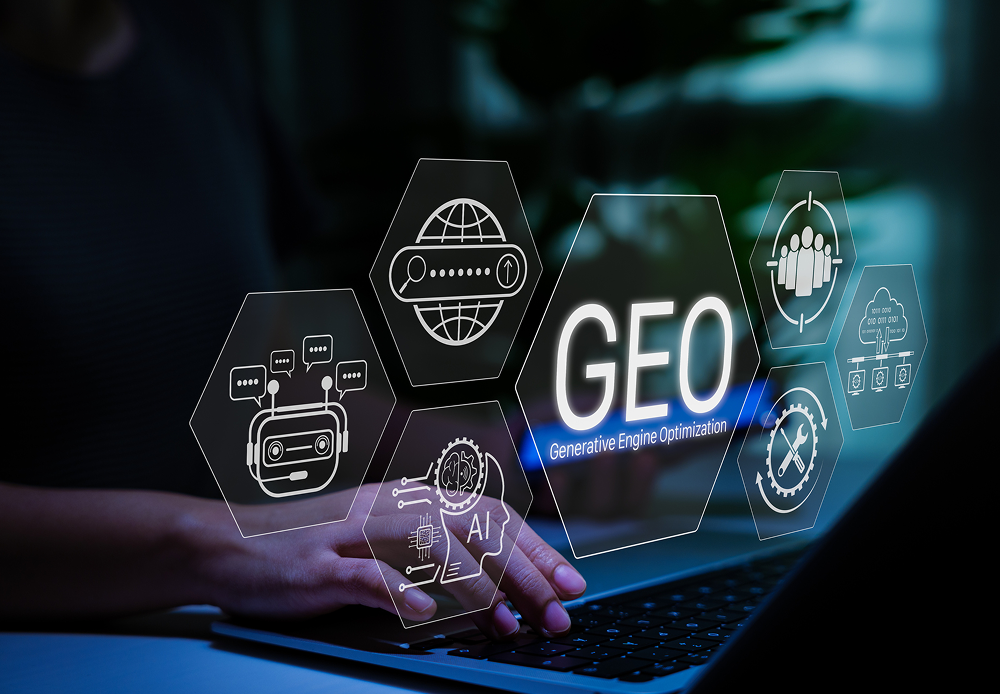
Generative AI tools are changing how people find information online. Instead of scrolling through a list of links, many users now ask an “answer engine” (such as AI chatbots or AI-powered search summaries) to produce a direct, written response. This shift has created a new discipline alongside traditional search engine optimization (SEO): generative engine optimization (GEO).
At a high level, GEO is about helping your content be understood, selected, and cited when generative systems create answers. Done well, it improves the chances that accurate information from your site shows up in AI-generated responses without relying on tricks or keyword stuffing.
The shift from search engines to generative engines
Traditional search engines typically return ranked results (webpages) and let the user choose what to click. Generative engines often do something different:
- They retrieve information from multiple sources (sometimes from the open web, sometimes from curated databases).
- They summarize and combine what they find into a single response.
- They may cite sources, quote snippets, or paraphrase content.
Because the output is synthesized, the visibility goal changes. It’s not only “rank higher,” but also “become a reliable source that the system draws from.”
What is Generative Engine Optimization?
Generative engine optimization is the practice of structuring and presenting content so that generative AI systems can accurately interpret it and are more likely to use it when answering relevant questions.
A simple way to think about GEO is that it focuses on answer-worthiness:
- Is the information clear and unambiguous?
- Is the author or organization identifiable?
- Are claims supported by sources?
- Is the content easy for machines to parse (headings, definitions, lists, tables where appropriate)?
- Is it current and internally consistent?
For a neutral definition and background, see: Learn what generative engine optimization is.
How GEO differs from traditional SEO
GEO and SEO overlap, but they are not identical.
- SEO often centers on rankings, backlinks, and click-throughs from search results pages.
- GEO centers on being accurately represented in AI-generated answers, where the user may never click a link.
That difference matters because generative systems tend to reward content that is:
- easy to extract facts from,
- written with consistent terminology,
- supported by credible sources,
- and clearly tied to real-world entities (a person, company, product, law, or concept).
In practice, many “good SEO” habits (clear structure, helpful content) also support GEO, but GEO places extra weight on how content reads when it is quoted, summarized, or cited.
Core practices that improve visibility in generative answers
Write for clarity and extraction
Generative systems perform best when the content contains clean, reusable segments:
- short definitions near the top,
- bullet-point criteria,
- step-by-step explanations,
- and clearly labeled examples.
Avoid burying the key point in long introductions. If a reader can quickly find the answer, an AI system is more likely to do the same.
Use structure that machines recognize
Strong structure helps both humans and AI:
- descriptive H2/H3 headings,
- concise paragraphs,
- consistent terminology,
- and simple formatting for lists and definitions.
Where relevant, consider adding basic structured data (for example, organization details, author info, or FAQ-style sections). This supports “AI visibility” by reducing ambiguity about what the page is claiming.
Strengthen credibility signals
Generative systems may prefer content that looks reliable. Common signals include:
- an identified author (and credentials where relevant),
- a clear publication or “last updated” date,
- citations to primary sources (laws, regulators, standards bodies),
- and consistent branding and factual alignment across your site.
Keep pages current and consistent
Because generative answers can amplify mistakes, outdated content is risky. Create a routine for reviewing pages that discuss fast-changing topics (regulations, product features, pricing, or statistics). Even small inconsistencies-like two different definitions across your site-can reduce the likelihood of being used as a source.
Legal and compliance considerations (in plain language)
GEO is often discussed as a marketing tactic, but it can raise legal issues because it affects how information is presented and reused.
Copyright and content ownership
Copyright is the legal protection that typically applies to original writing, images, and creative work. If your GEO strategy involves republishing, summarizing, or using AI-assisted drafting, you should track what is human-created, what is licensed, and what is generated.
If your organization registers creative works in the United States, the U.S. Copyright Office has published guidance on how it treats works containing AI-generated material. (In simple terms: the human-authored parts matter most.)
Link: U.S. Copyright Office – AI policy guidance (PDF).
Privacy and personal data
Privacy law (and company policies) can limit how you collect, store, and publish information about identifiable people. If you are optimizing content that includes names, contact details, or user stories, be careful about consent and minimization-only use what you truly need, and avoid publishing sensitive details.
False or misleading claims
If GEO encourages content that is overly confident, simplified, or “headline-only,” it can drift into claims that are misleading-especially when AI repeats those claims without context. Consumer protection rules generally expect that advertising claims are truthful and can be supported.
Defamation and reputational risk
Defamation is a legal term for false statements presented as fact that harm someone’s reputation. Because generative tools can spread summaries quickly, content that names individuals or competitors should be reviewed carefully for accuracy, context, and tone.
Common misconceptions about GEO
- “GEO is just SEO with a new name.” There is overlap, but GEO is more about being selected and summarized than ranking and clicks.
- “If we add more keywords, AI will pick us.” Overuse can make content less readable and less trustworthy.
- “AI always cites sources fairly.” Some systems cite inconsistently or paraphrase without clear attribution, so clarity and credibility in your content are essential.
Key insights to remember
Generative engine optimization is the practice of making content easier for AI answer engines to interpret and use accurately. It benefits from clear structure, strong sourcing, and consistent terminology, often the same qualities that help human readers. Because AI-generated responses can amplify errors and oversimplify claims, GEO also intersects with practical legal concerns, especially around copyright, privacy, and misleading statements. The safest, most durable GEO strategies are the ones that improve clarity and reliability rather